


https://www.nytimes.com/2024/03/28/learning/whats-going-on-in-this-graph-april-10-2024.html
As global temperatures rise due to burning fossil fuels, understanding how our electricity is generated matters more than ever. Electricity production—both worldwide and in the United States—is responsible for the largest share of greenhouse gas emissions. The types of energy we use and how we combine them shape energy prices, climate outcomes, and the choices governments and consumers face in the decades ahead.
Today, electricity comes from a mix of fossil fuels, nuclear power, and renewable energy. But that mix is changing—and it looks very different around the world.
The Global Picture
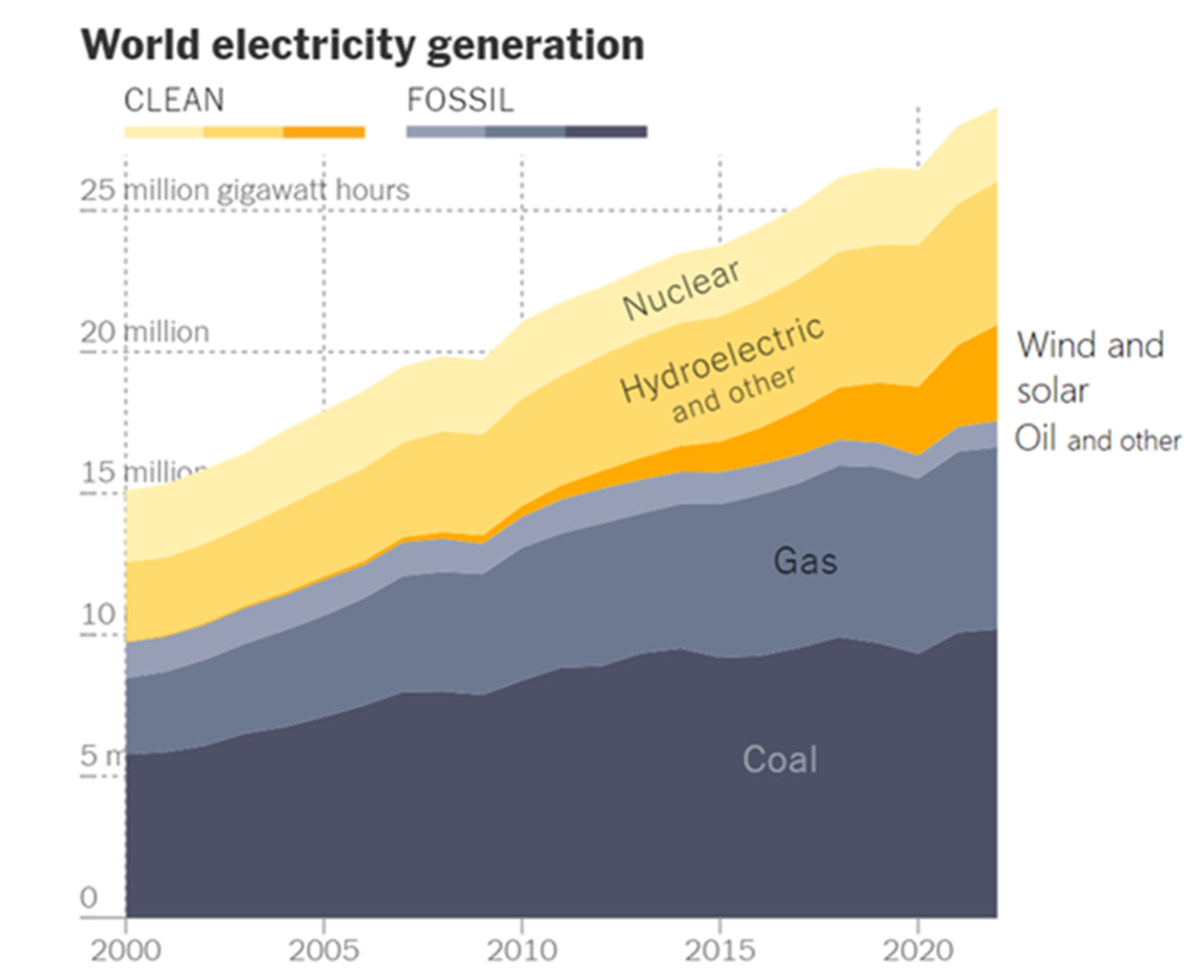
Electricity generation accounts for roughly 25%–30% of global greenhouse gas emissions. Fossil fuels, especially coal and natural gas, remain the dominant sources. Renewables like wind and solar are growing quickly, but their variability means countries need far more energy storage. Wind turbines produce little power when winds are calm, and solar generation drops when skies are cloudy.
Different nations rely on different energy blends. France gets most of its electricity from nuclear power. Norway depends heavily on hydropower. The U.S. and Europe rely on a combination of natural gas, renewables, and nuclear—where nuclear consistently provides about 20%.
Fossil Fuels
Coal
Coal remains the world’s single largest source of electricity, especially in fast-growing economies such as China and India. But in many other regions it is declining due to high emissions and competition from cheaper alternatives.
Natural Gas
Natural gas use has surged, particularly in the U.S., where it is promoted as a cleaner alternative to coal and a necessary backup for wind and solar. Gas plants ramp up quickly when renewable output drops. However, natural gas production releases methane—a potent greenhouse gas—which complicates its “cleaner” reputation.
Oil
Oil-fired electricity has become rare and is mostly found in remote regions or island nations. It is both expensive and highly polluting, and most countries are phasing it out.
Nuclear Energy
Nuclear power supplies about 10% of global electricity. It runs continuously and produces no direct carbon emissions. Countries like China and South Korea continue to build new reactors, while others—such as Germany—have shut theirs down.
Challenges remain: safety concerns, long-lived waste, and high upfront costs. Still, interest is rising as nations look for dependable, low-carbon energy, and new advanced reactor designs aim to improve safety and reduce waste.
Renewable Energy
Hydropower
Hydropower is the world’s largest renewable source, providing steady, low-carbon electricity. But it requires specific geography and is increasingly affected by drought.
Wind
Wind power has expanded rapidly, including offshore projects that take advantage of stronger winds. Variability remains a challenge: grids must adapt to wind’s natural ups and downs, often by relying on fossil fuels until storage technology catches up.
Solar
Solar is the fastest-growing energy source worldwide. Costs have fallen sharply, making rooftop systems and large-scale solar farms increasingly common. But solar only works when the sun shines, making reliable storage systems crucial.
The Storage Challenge
As wind and solar grow, energy storage becomes essential to keep power flowing around the clock. Batteries, pumped hydropower, and emerging long-duration storage technologies help balance supply and demand. Although storage technology is improving quickly, scaling it to support entire national grids remains a major challenge.
Waste and Recycling Challenges
Solar panels and wind turbines require more raw materials to produce than hydropower or nuclear energy, and both create significant waste at the end of their lifespans.
Solar panels contain heavy metals such as cadmium, lead, and arsenic; improper disposal can contaminate soil and water. Wind turbine blades contain toxic oils and rare earth elements, and their massive composite construction makes them notoriously difficult to recycle—many end up in landfills.
Recycling lags far behind production. By 2035, discarded solar panels may outweigh new ones by more than 2.5 times. In the U.S. alone, more than 720,000 tons of turbine blades could end up in landfills by 2040.
What the Future Might Look Like
The world is moving toward cleaner electricity, but each country faces unique constraints. Some are expanding nuclear power; others are betting heavily on renewables. Many will continue relying on natural gas while trying to reduce emissions.
One thing is certain: electricity demand will keep rising. Growing populations, more electric vehicles, widespread adoption of heat pumps, and the shift from fossil-fuel technologies to electric ones all push demand upward.
Electricity is becoming cleaner, but the world still relies heavily on fossil fuels. As nations work toward low-carbon, resilient energy systems, consumers can help by using electricity wisely and choosing efficient technologies.
Understanding where our electricity comes from helps us make smarter choices in a rapidly changing energy world.