


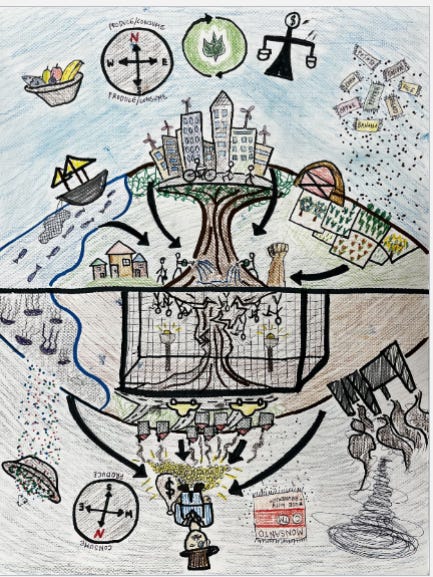
Most people do not experience sustainability in terms of parts per million of CO₂ or global temperature thresholds. They experience it through the conditions of daily life—rising home insurance costs driven by more frequent and intense storms and wildfires, poor air quality, increasing food prices, and more frequent heatwaves.
A truly sustainable world would therefore be built around human well-being, encompassing the full range of conditions that allow people to live healthy, secure, and meaningful lives.
In the sustainable world of future, people will live in cities designed around humans, not cars. Communities would be walkable, with jobs, schools, parks, shops, and cultural centers accessible on foot, by safe cycling routes, or via efficient public transit. There will be less congestion, fewer emissions, and cleaner air. Shorter commutes would give people back time to enjoy their lives.
Housing would be energy-efficient and affordable. Well-insulated homes will protect residents from extreme heat and cold while lowering their utility bills. Thoughtful urban planning will reduce sprawl, preserve nearby ecosystems, and foster stronger, more connected communities.
Food systems will prioritize both health and sustainability. Diets would include more plant-based options, food waste would be significantly reduced, and regional food networks will cut emissions associated with long-distance transportation. The result would be fresher food, better nutrition, and a smaller environmental footprint.
As people eat healthier foods, walk or bike more, breathe cleaner air, and experience less stress, health care costs will decline.
The transition to a sustainable economy will also create new job opportunities—in manufacturing and maintaining clean energy systems, building and operating nuclear power plants, constructing climate-resilient infrastructure, building energy-efficient housing, and retraining workers in declining industries.
Education systems would prepare people not only for employment in the new green economy, but for participation in a rapidly changing world. Skills such as adaptability and environmental literacy will become essential, helping individuals and communities navigate uncertainty and contribute to new solutions.
Equity will be central component of this new world. A sustainable future cannot exist if large segments of the population are excluded from its benefits. Policies and investments will prioritize communities that have historically borne the greatest environmental and economic burdens, ensuring that improvements in quality of life are broadly shared.
Finally, economies will measure success differently. Instead of focusing primarily on GDP growth, progress will be defined by improvements in health, well-being, environmental stability, and opportunity. The goal would not simply be to produce more, but to live better.
In this new world, sustainability is no longer an abstract global target. It becomes a tangible improvement in everyday life, healthier, more affordable, more secure, and more connected to the natural environment. That is what makes it not only necessary, but highly desirable
.