


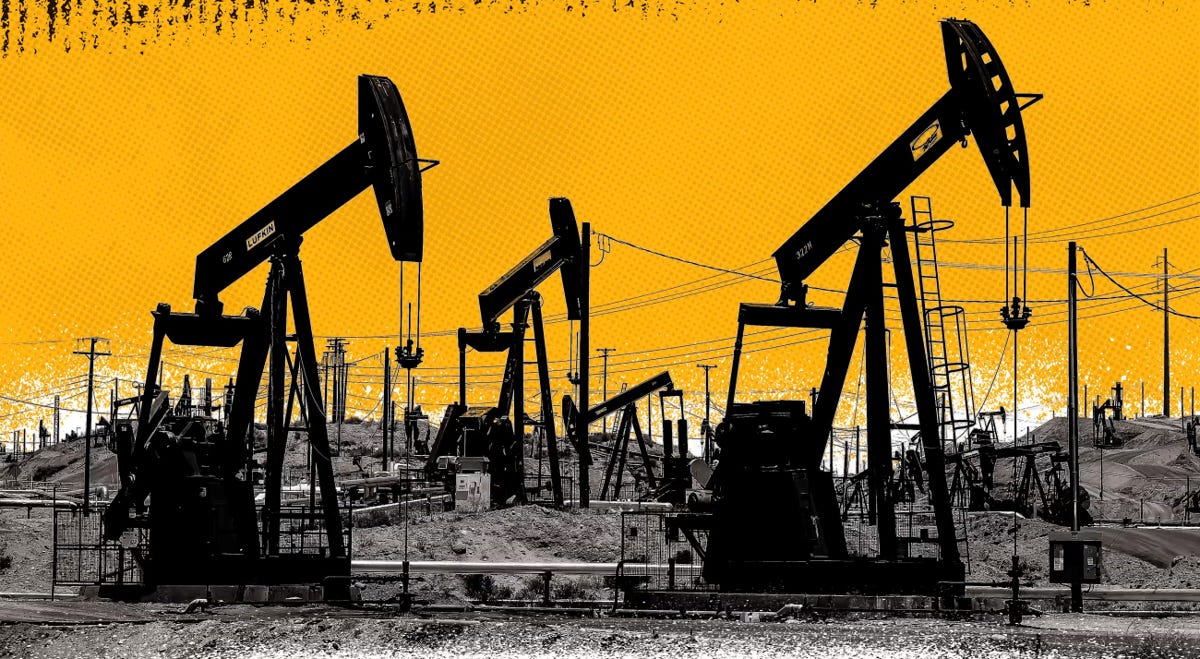
By the late 1980s, the evidence for global warming had become impossible to ignore. As governments in industrialized nations—including the United States—began to move toward international regulations on fossil fuel emissions, fossil fuel companies faced a pivotal choice: either embrace the transition to clean energy by gradually phasing out oil, gas, and coal and becoming clean energy companies, or use their immense financial and political power to resist change. The industry overwhelmingly chose the latter, adopting a two-pronged strategy to control the narrative and block climate regulations.
Controlling the Narrative
From the mid-1990s to 2015, the fossil fuel industry spent over $3 billion on advertising campaigns aimed at denying or downplaying the link between fossil fuels and global warming. These campaigns questioned the validity of climate science, framed global warming as a natural (and even potentially beneficial) phenomenon, and funded think tanks and organizations that either denied human-caused climate change or minimized its risks.
As scientific consensus on climate change solidified, industry messaging shifted. Companies no longer denied that climate change was real or human-caused but instead questioned its seriousness and the urgency of the response. A recent example of this strategy can be seen in statements by U.S. Secretary of Energy Chris Wright, formerly the CEO of Liberty Energy, the nation’s second-largest fracking company. Wright has publicly stated that “climate change is a by-product of human progress—not an existential threat” and that there has been “no increase in the frequency or intensity of hurricanes, tornadoes, droughts, or floods, despite endless fearmongering.” He further claimed, “There is no climate crisis, and we're not in the midst of an energy transition, either.”
Wright’s remarks closely echo the talking points of fossil fuel executives over the decades. Exxon CEO Lee Raymond once claimed, “The scientific evidence is inconclusive.” Rex Tillerson, another former ExxonMobil CEO, stated, “Climate impact is very hard to predict.” More recently, CEO Darren Woods has shifted the focus, arguing, “The problem is emissions, not oil and gas production.”
In recent years, fossil fuel companies have also launched aggressive public relations campaigns to rehabilitate their image. They emphasize the indispensability of fossil fuel-derived products like plastics to modern life and promote natural gas as a "clean" alternative or a bridge to the era of clean energy that they insist is many decades away. They have also funded astroturf organizations such as “Cowboys for Natural Gas” and “Mothers for Natural Gas”—the latter reportedly featuring AI-generated personas—to simulate grassroots support. Simultaneously, companies claim to be investing in clean energy and emissions-reduction technologies, despite evidence of minimal actual investment in these projects. Increasingly oil and gas companies use social media to reach the younger public.
Opposing Regulations
In parallel with media campaigns, fossil fuel companies have invested heavily in shaping regulatory policy. Since the 1990s, industry has spent hundreds of millions of dollars on lobbying and campaign contributions to influence elections and regulatory frameworks. In 1989, major industry groups—including the American Petroleum Institute (API), the National Association of Manufacturers, and the Edison Electric Institute—formed the Global Climate Coalition (GCC) to block international climate agreements. The GCC played a central role in preventing the U.S. from ratifying the Kyoto Protocol. ExxonMobil, for instance, warned the George W. Bush administration that ratifying Kyoto would be “unjustifiably drastic and premature.”
This resistance has continued in more recent years. Rex Tillerson, while CEO of ExxonMobil, accused the Environmental Protection Agency (EPA) of regulatory overreach and argued that markets—not federal mandates—should drive emissions reductions. API CEO Jack Gerard dismissed environmental rules as “unnecessary, redundant, [and] costly.” In 2024, API Policy Chief Dustin Meyer stated the industry's position plainly: “We think that this is a time in which Americans should have more choices, not fewer, when it comes to the energy that they use.”
At the state level, fossil fuel companies have aligned themselves with the American Legislative Exchange Council (ALEC), a right-wing political organization that provides model legislation on a broad range of social and economic issues to Republican lawmakers across all fifty states. Through this partnership, ALEC has drafted and promoted numerous bills designed to weaken environmental protection and hinder the transition to renewable energy.
The fossil fuel industry’s success in blocking climate regulations is rooted in its outsized influence over elected officials. This influence is wielded primarily through lobbying and campaign contributions. In the United States, all members of the House of Representatives and one-third of the Senate face re-election every two years, creating a constant demand for campaign funding. Following the Supreme Court’s decision to permit unlimited contributions from corporations, associations, and individuals, the cost of running for office has increased noticeably.
In 2024, congressional campaigns totaled $9.5 billion, while the presidential election added another $5.3 billion. The correlation between campaign funding and electoral success is stark: in that same year, 94% of House candidates and 88% of Senate candidates who raised more money than their opponents won their races.
The fossil fuel industry has invested heavily in this system. In 2024 alone, oil and gas companies spent $153 million on lobbying government officials and contributed over $219 million to political parties and candidates, including $26 million in direct donations to individual campaigns—more than $23 million of which went to congressional races. Of these contributions, 88% went to the Republican party and Republican. *
These investments have helped secure a political environment that is largely favorable to fossil fuel interests.
In Part 3, we’ll examine the key political allies and policy decisions that have resulted from this financial influence.
*OpenSecrets.org