


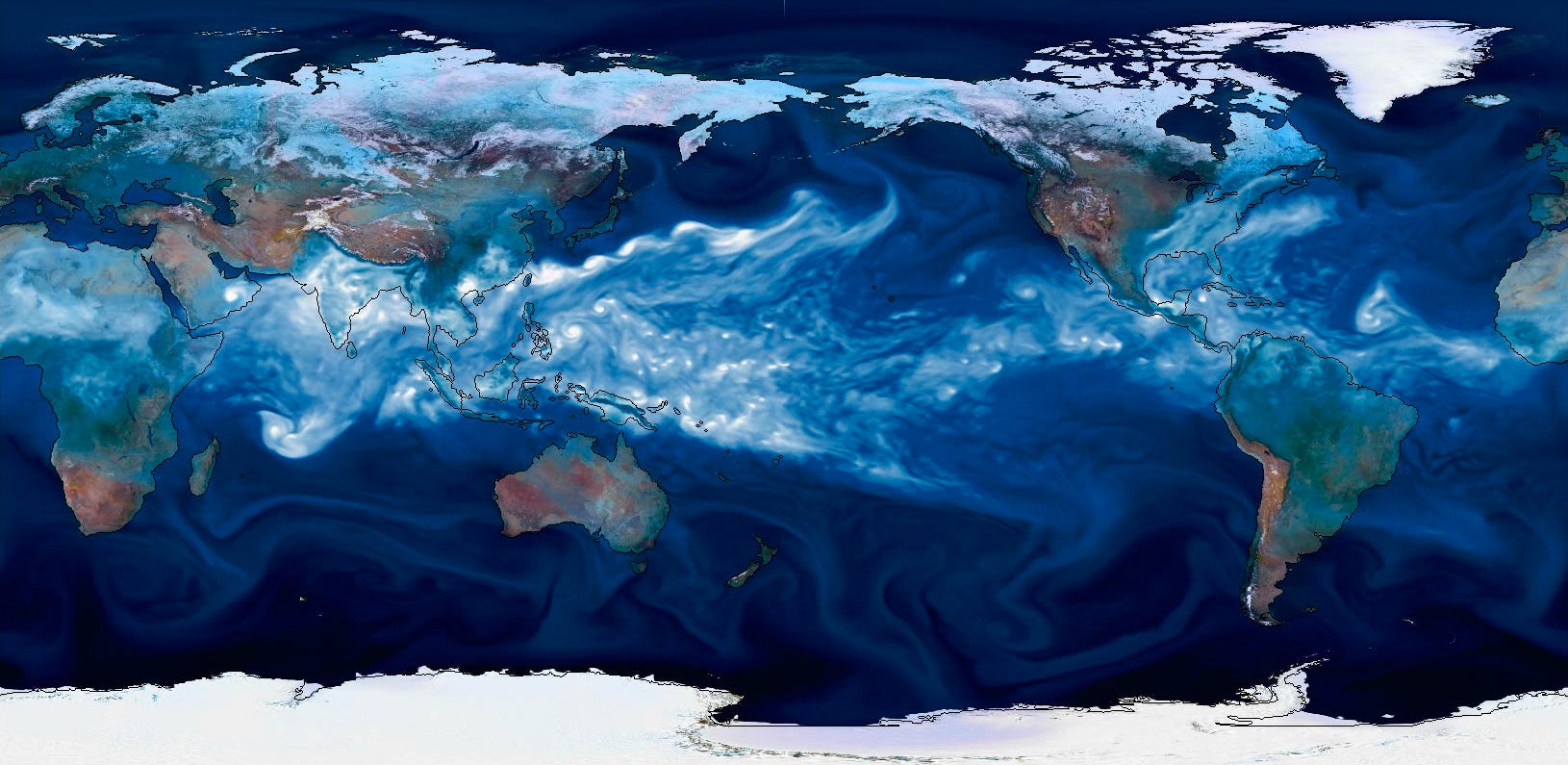
By mid-2025, global temperatures are on track to make this year one of the top three warmest on record. In May, atmospheric carbon dioxide (CO₂) concentrations surpassed 430 parts per million (ppm) for the first time. The Arctic Sea ice extent hit its lowest annual maximum in March. The year has been marked by extreme weather events: a sharp rise in floods and tornadoes across the U.S., heatwaves across Europe, Asia, and Canada and wildfires that had consumed over 100 million hectares (247 million acres) by June 1.
How Did We Get into This Mess?
Ignoring Scientific Evidence
The link between greenhouse gas emissions and rising global temperatures has been understood for more than a century.
Swedish scientist Svante Arrhenius used the principles of physical chemistry to calculate the effect of CO₂ on Earth’s temperature in 1896. He warned that industrial emissions could eventually raise global temperatures—though he believed the process would take centuries.
In 1938, British engineer Guy Stewart Callendar presented data showing a warming trend since the 1880s. By the late 1950s, American scientist Charles Keeling was documenting rising CO₂ levels caused by fossil fuel combustion and their correlation with global temperatures. His “Keeling Curve” remains one of the most important data records in climate science.
In the following decades, warning the public and government officials became more urgent for scientists. In 1985, famed astronomer Carl Sagan testified before the U.S. Senate about the threat of sea level rise due to human-induced warming. In 1988, the director of NASA’s Goddard Institute for Space Studies, James Hansen, told the Senate—with 99% certainty—that global warming was caused by greenhouse gas emissions and urged immediate reductions in fossil fuel use. The extreme weather events Hansen predicted—intensifying storms, droughts, floods—have all come to pass.
Oil Companies Knew
Shockingly, oil companies were also aware of these risks for decades—but kept them hidden.
In November of 1959, physicist Edward Teller of atom bomb fame warned oil executives, economists, scientists, and government officials who had gathered at Columbia University event marking the 100th anniversary of the U.S. oil industry about the coming global warming. A decade later, a study by the Stanford Research Institute commissioned by the American Petroleum Institute forecast significant warming by the year 2000, with potential climatic upheaval.
By the early 1980s, Exxon scientists had already modeled a 3°C temperature rise by the mid-21st century and anticipated severe consequences, including sea level rise, droughts, and extreme weather. In 1982, Exxon completed a detailed internal report predicting the warming we are now experiencing. The front page of the report noted it was not to be shared externally. The report remained secret until uncovered by Inside Climate News in 2015.
Shell’s internal assessments were equally dire. A 1988 confidential report acknowledged the company’s contribution to rising CO₂ levels and warned that by the time warming became obvious, it might be too late to act.
The U.S. Government Wasn’t in the Dark Either.
In 1965, the President’s Science Advisory Committee report warned Lyndon Johnson that CO₂ emissions were returning to the atmosphere carbon that had been sequestered over hundreds of millions of years. The report predicted a 25% increase in CO₂ by 2000 and noted that the resulting climate changes could be “deleterious” to humanity. Johnson proposed additional funding for climate research, but no concrete national policy followed.
In 1977, the Carter administration received similar warnings. Carter acknowledged the issue and called for investment in alternative energy—but again, no formal national climate action plan emerged.
In 1983, the EPA produced a comprehensive study evaluating options such as fuel taxes and fossil fuel bans. It predicted a 2°C warming by mid-century and called for a gradual shift away from fossil fuels. The Reagan administration dismissed the report as “unnecessarily alarmist,” a view echoed decades later by the Trump administration’s Secretary of Energy, Chris Wright.
By the end of the 1980s, the evidence of global warming could no longer be ignored. As governments began to explore international regulations on fossil fuel emissions, the fossil fuel industry pivoted.
In Part Two, we’ll explore the deliberate disinformation campaigns and lobbying strategies that have shaped the public narrative and stalled meaningful climate action.