


The climate story behind your hamburger is the story of the high environmental cost of modern food systems. What looks like a simple, affordable staple is the product of a long, resource-intensive chain that stretches across continents and ecosystems.
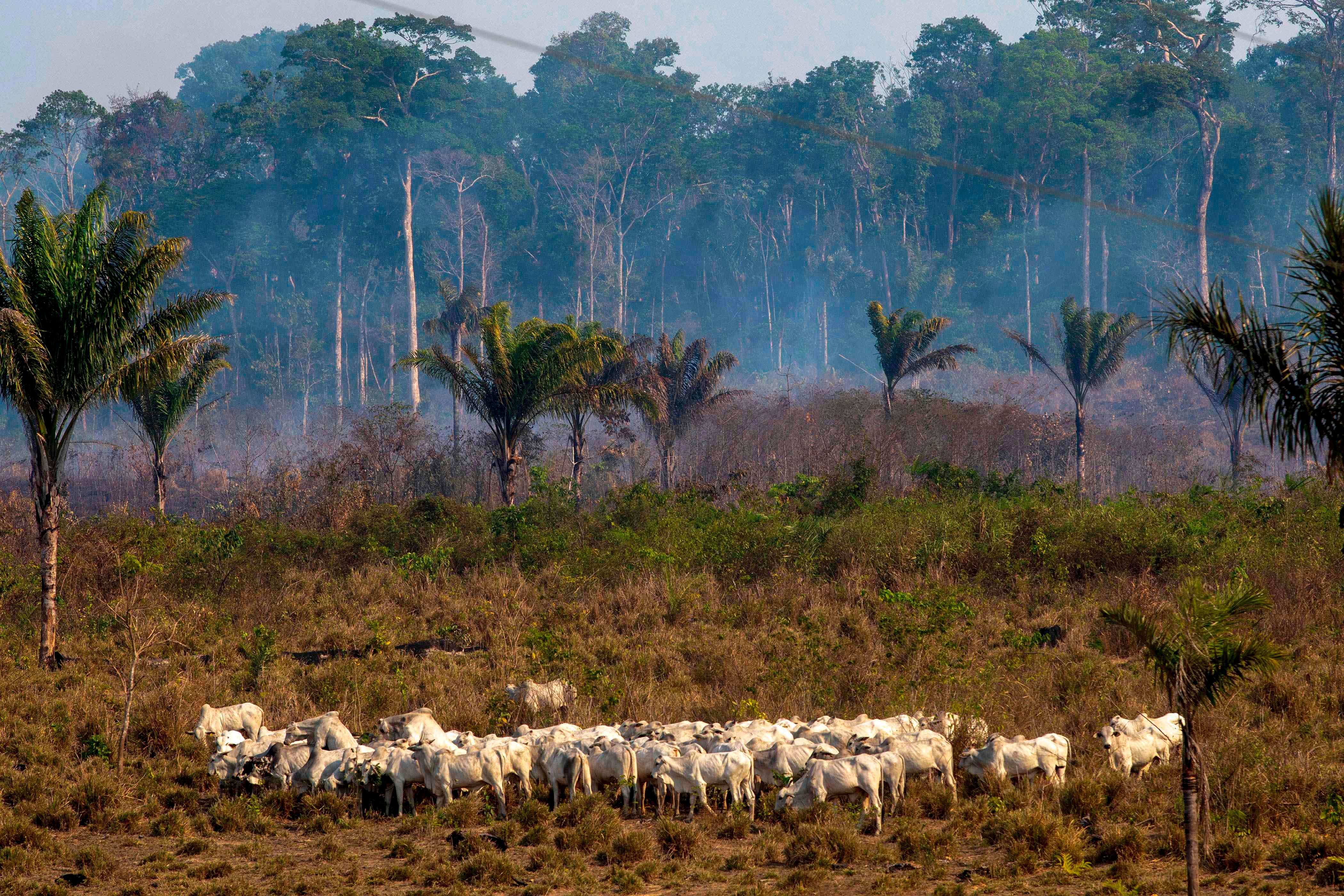
Land: The starting point. Much of the world’s beef is produced on land that was once forest or natural grassland. In regions like the Amazon, vast areas are cleared to create pasture or to grow soy used as animal feed.
This transformation comes at a steep price: cutting down forests releases large amounts of stored carbon into the atmosphere, accelerates biodiversity loss, and weakens the planet’s natural ability to absorb future emissions. In this way, even a single hamburger is indirectly tied to global deforestation patterns and global warming.
Then there are the cows. Cattle are ruminants, and their digestive process produces methane, a greenhouse gas far more potent than carbon dioxide in the short term.
A single cow emits approximately 154 to 264 pounds (70–120 kg) of methane per year. There are 1.5 billion cows in the world. This is one of the reasons beef consistently ranks among the highest-emission foods in the world.
Emissions don’t start with the cow. Most industrial beef production relies heavily on feed crops like corn and soy. Growing these crops requires synthetic fertilizers, which release nitrous oxide, another powerful greenhouse gas.
Add to that the fossil fuels used in farm machinery, irrigation systems, and transportation, and you have a second layer of emissions embedded in the burger long before it reaches your plate.
Water use is another critical factor. Beef is among the most water-intensive foods we produce. From irrigating feed crops to providing drinking water for 1.5 billion cattle and processing the meat, the total water footprint of a single hamburger can reach thousands of liters. While estimates vary, the comparison is clear: beef requires far more water than most plant-based proteins.
The environmental costs continue to accumulate. Slaughtering, processing, refrigeration, and transportation all require energy—much of it still derived from fossil fuels. Long supply chains mean that your hamburger may have traveled hundreds or even thousands of miles before arriving at your table.
The beef patty is only part of the story. Cheese adds another layer of emissions, as dairy production is also methane-intensive. The wheat used for the bun depends on fertilizers and land use, and packaging contributes additional layer of waste and emissions.
Americans eat roughly 4–4.5 billion hamburgers every month. A single beef hamburger is responsible for roughly 3–5 kg (6-10 pounds) of CO₂-equivalent emissions. Hamburgers are therefore responsible for 12–22 million metric tons of emissions per month. To put that in perspective, that’s comparable to the monthly emissions of 31 to 57 million typical U.S. passenger vehicles out of nearly 300 million.
There is a simple way to think about it. A cheap hamburger is often inexpensive because many of its true costs are externalized—to forests, the atmosphere, and future generations.
What can you do? The average American eats three burgers per week. If you eat only one less burger during the week you can prevent 0.15 tons of greenhouse gas emissions from entering the atmosphere per year.
Reducing red meat consumption by half can lower your total diet-related carbon footprint by roughly 25%. Switching to other kinds of meat can further reduce your dietary carbon footprint.