


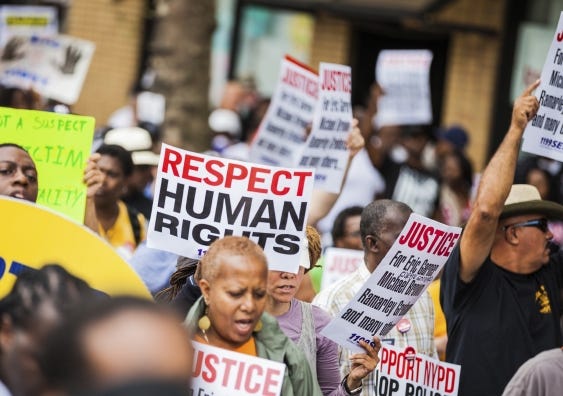
At first glance, the path toward a cleaner world powered by solar and wind energy—one that respects human rights—appears straightforward. Numerous governmental and non-governmental organizations outline the roles that governments, consumers, and corporations can play in ensuring that the transition to renewable energy does not rely on the exploitation of children, workers, or communities.
Governments, for example, are urged to enforce labor laws that guarantee fair wages and safe working conditions, establish strong social protection systems for vulnerable families, and invest in quality education to keep children out of mineral extraction. They are also encouraged to use trade agreements and public procurement policies to include binding labor-rights clauses and to ban imports of goods produced with child or forced labor.
Consumers are advised to educate themselves using tools such as the U.S. Department of Labor’s List of Goods Produced by Child Labor or Forced Labor. They are encouraged to make ethical purchasing decisions by supporting companies with transparent supply chains, seeking third-party certifications, joining advocacy campaigns, participating in boycotts, contacting companies about sourcing and labor practices, supporting watchdog organizations such as the Corporate Accountability Lab, and urging legislators to pass laws mandating supply-chain transparency and enforcement of international labor standards.
Corporations, for their part, are expected to conduct human-rights due diligence by establishing systems to identify, assess, and mitigate labor risks in their supply chains. Recommended practices include conducting risk assessments, commissioning independent audits, publicly disclosing findings, addressing violations in cooperation with governments and civil society, and participating in industry initiatives such as the Responsible Minerals Initiative, the Global Battery Alliance, or the ILO Child Labour Platform.
However, these solutions are often presented without sufficient context—and that context matters greatly if meaningful change is to occur.
Under both domestic and international law, governments are formally responsible for protecting the welfare of their citizens. In practice, however, their capacity to do so has been significantly weakened by the power of multinational corporations operating within a globalized market economy. In advanced economies such as the United States and the European Union, campaign finance and lobbying shape policies that frequently prioritize corporate interests. In the United States, more so than in the EU, this has contributed to market concentration, stagnant wages, and weakened labor protections.
In developing countries, governments are often encouraged by multilateral institutions such as the World Trade Organization, the World Bank, and the International Monetary Fund to focus on their “comparative advantage”—which, for many, means low-cost labor, raw-material exports, or both—and to attract foreign investment by lowering labor and environmental standards. Strong enforcement of labor laws that raise wages or improve working conditions can increase business costs and prompt corporations to relocate production to countries with weaker regulations. In some cases, government officials also benefit from corrupt relationships with multinational firms, while their political survival may depend on support from U.S. or European governments.
Consumers, meanwhile, have limited capacity to ensure that corporations respect human rights. Global supply chains are highly complex, often spanning multiple countries and involving numerous intermediaries from raw-material extraction to final assembly. This complexity makes it nearly impossible for individuals to trace human-rights abuses to specific stages of production. Corporations also control much of the information about their own practices, and ethical claims are frequently vague, misleading, or difficult to verify. Audits may be superficial or manipulated, with suppliers coaching workers or falsifying records to conceal violations.
Public tools such as the U.S. Department of Labor’s lists of goods produced with child or forced labor play an important role in raising awareness. These lists identify products—such as cobalt, gold, or electronics, the countries where they are produced, and the forms of exploitation involved. However, because they focus on sectors rather than individual companies, their usefulness for everyday consumer decision-making remains limited.
Mining and technology companies routinely claim adherence to human-rights standards and point to their participation in initiatives such as the UN Global Compact or the UN Guiding Principles on Business and Human Rights. These frameworks emphasize respect for human rights, due diligence, and access to remedies. Yet serious allegations of abuse—particularly in the mining of high-demand minerals such as lithium and cobalt—continue across the globe. Companies often attribute this gap between commitments and outcomes to the complexity of global supply chains and the high cost of effective monitoring, arguments that gain credibility when echoed by pundits and academics.
What is often left unsaid is that corporations have actively resisted binding enforcement mechanisms for these frameworks. Instead, they favor voluntary, self-regulatory approaches that avoid strict rules, independent oversight, and meaningful sanctions. Similar limitations apply to initiatives such as the Voluntary Principles on Security and Human Rights and the International Council on Mining and Metals, both of which rely on voluntary compliance.
Evidence suggests that voluntary corporate commitments have largely failed to protect human rights. The Corporate Human Rights Benchmark (CHRB), created by investors and civil-society organizations, consistently documents weak corporate performance. In its 2023 assessment of 101 major companies, the average score was just 27 out of 100, with two-thirds scoring below 30. None demonstrated strong commitments to paying living wages, and fewer than 10 percent committed to protecting human-rights defenders. The report also identified major gaps between corporate promises and real action on child labor, with only 27 percent of companies engaging affected workers and communities during their due diligence processes. As the CHRB concludes, “If businesses will not clearly demonstrate their respect for human rights, then governments should step in with tougher laws to protect people—the majority are failing to make the grade.”
For governments to play this role effectively, their political independence from corporate power must be restored. This requires reducing the influence of private money in politics so that elected officials can represent citizens and ideas rather than donors. In the United States, achieving meaningful campaign finance reform faces formidable obstacles. Members of Congress are unlikely to dismantle a system that has helped secure their election, and a coalition of conservatives and liberals continues to defend corporate and individual campaign donations as a matter of free speech. The Supreme Court, even with changes in its composition, is unlikely to support a comprehensive overhaul of election financing given its general tendency to follow precedent. Yet public opinion tells a different story: roughly three-quarters of U.S. voters support partial or complete reform of the current system and believe that money skews political decision-making toward the narrow interests of corporations and wealthy elites. Harnessing this public support is essential. Without structural political reform, laws capable of enforcing an ethical and humane transition to clean energy will remain out of reach, and market-driven solutions will continue to mask—rather than resolve—the human costs of the renewable energy transition.