


Every day, we are surrounded by plastics. From the keyboard you’re typing on to the cutting board in your kitchen, plastics have become inseparable from modern life. But this convenience comes at a cost—and it’s no longer just an environmental issue. Microplastics are now entering our bodies, with potentially serious consequences for our health.
Since the 1950s, the world has produced more than 9 billion tons of plastic. In 2024 alone, the global plastic industry produced over 400 million tons, roughly equal to the weight of every person on Earth. Less than 10% of this plastic is recycled; the rest ends up in landfills or are discarded on land, thrown away into rivers and oceans, where it fragments into microplastics—tiny particles smaller than a grain of rice.
How Microplastics Enter Our Bodies
Microplastics are everywhere: in rainwater, drinking water, the air, and the food we eat. They are released when larger plastics break down, synthetic fibers shed from clothing, or microbeads wash off from personal care products. Everyday activities—driving, doing laundry, or even walking on synthetic carpets—release these particles, which can travel far on wind currents.
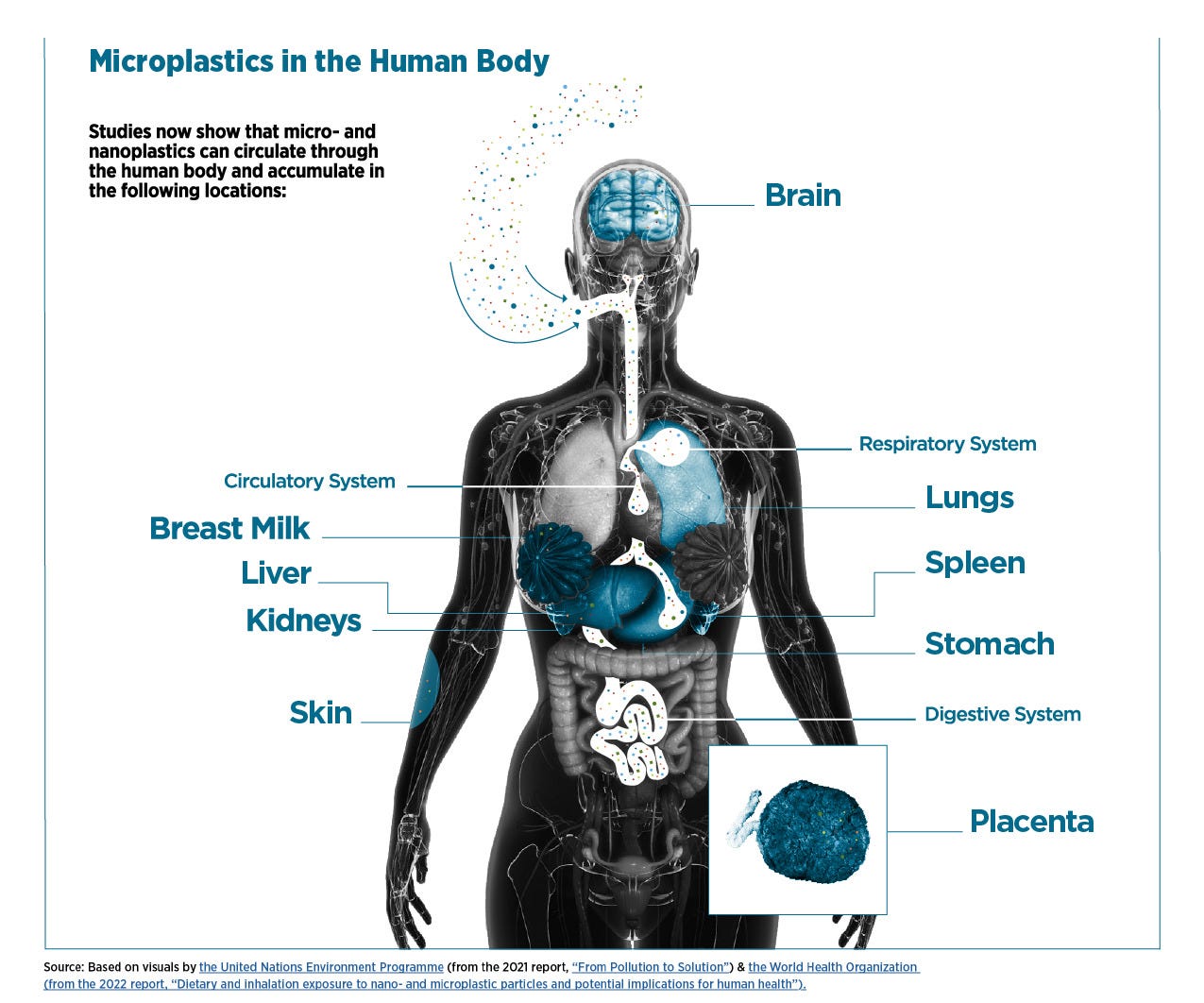
Recent studies have detected microplastics and smaller nano plastics in human blood, lungs, the placenta, and even breast milk. In other words, we’re not just living around plastics—we are living with them.
Health Risks
1. Chronic Inflammation
Microplastics irritate tissues and trigger inflammation. Nano plastics can penetrate cells and disrupt their function. Chronic inflammation is a known contributor to heart disease, diabetes, and certain cancers. Foreign bodies designed to last for a long time circulating inside our bodies.
2. Hormonal Imbalance
Chemicals used in plastics, such as BPA, phthalates, and PFAS, are powerful endocrine disruptors. They can mimic or block hormones, causing fertility problems, early puberty, thyroid issues, and metabolic disorders. Many of these chemicals are banned in children’s products worldwide. They are not safe for kids but are still found in our kitchens.
3. Cardiovascular and Lung Disease
Microplastics have been found in arterial plaque, suggesting a link to heart attacks and strokes. Fibers from clothing and household dust can also settle deep in the lungs, aggravating asthma and other respiratory diseases.
4. Digestive Health
Microplastics can disrupt the gut microbiome, which is essential for immunity, metabolism, and even mental health. Early human studies echo findings from animals: plastic particles may interfere with digestion and overall gut function.
Microplastics in the Kitchen
Many everyday items—nonstick pans, plastic cutting boards, kettles, disposable cups, containers, and even dish sponges—shed tiny plastic particles during normal use. These particles end up in our food, drinks, and kitchen wastewater, making the kitchen a major point of human exposure.
How Microplastics Are Released
Plastic utensils and cookware break down through common activities like cutting, heating, blending, washing, and simple wear and tear. Cutting boards are a good example: slicing meat or vegetables on plastic boards can generate anywhere from a handful to thousands of microplastics per use. The amount released depends on the force applied, the sharpness of the blade, and the type of plastic. Polyethylene (PE) boards, for instance, release fewer particles than polypropylene (PP) boards because of differences in flexibility and durability.
Other tools also release large quantities of microplastics. Salt grinders with plastic components can shed thousands of particles. Blenders can generate hundreds of thousands of microscopic fragments in under a minute. Even nonstick pans can shed PTFE (Teflon) particles when scratched or worn—sometimes millions at a time.
Temperature plays a major role, too. Plastic kettles can release millions of microplastics per liter of boiled water. Plastic food containers shed far more particles when exposed to hot liquids or microwaving compared with room-temperature use. Even cold temperatures matter. Freezing makes plastic brittle, increasing the release of fragments over time.
Other Hidden Sources
Several overlooked kitchen products also release microplastics:
Dish sponges: A single sponge can shed 100–200 particles in seconds—and more than 100,000 over its lifetime.
Dishwashers: Plastic components degrade during washing cycles, releasing hundreds of particles into wastewater.
Detergents: Some dish soaps already contain microplastics as ingredients.
Disposable bags, tea bags, and coffee filters: These can release millions—or even billions—of particles when exposed to hot water.
What This Means for Everyday Life
Because kitchens bring together heat, friction, and frequent use of plastic, they are a major source of microplastic exposure. The message is clear: microplastics are deeply intertwined with daily routines, and while the health impacts are still being studied, minimizing exposure—by switching to glass or metal where possible, avoiding overly worn plastic tools, and limiting heat applied to plastics—can help reduce risk while science catches up.