


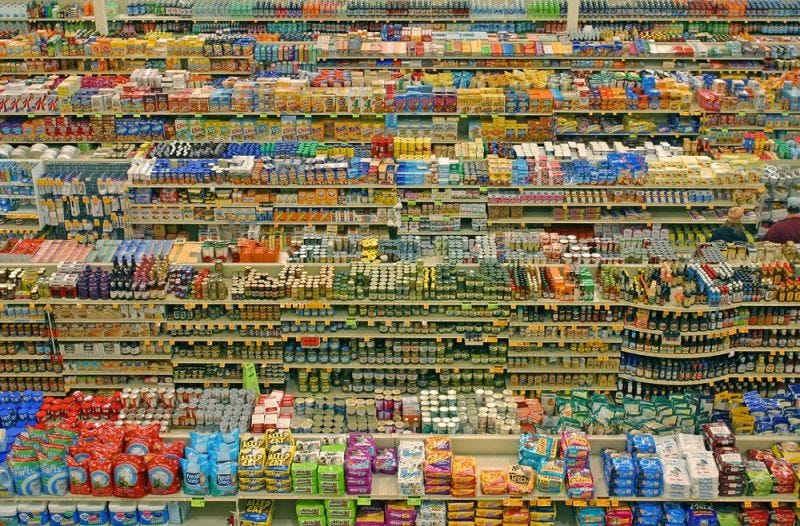
We often buy things to relieve stress, ease boredom, or simply because they may make our daily lives easier to manage. While these purchases may bring temporary comfort, they are not essential for our survival. Unlike food, shelter, or electricity, they are wants, not needs.
None-essential consumption has never been easier. With instant credit and round-the-clock access to online marketplaces, those of us who live in the so-called high-income countries can purchase nearly anything with few clicks. And we do—frequently:
The average American spends over $1,500 a year on food delivery — a convenience that helps make life easier for many busy individuals and families. However, these meals often arrive in non-recyclable plastic containers, accompanied by paper napkins, plastic cutlery, and packaged in plastic bags, all of which are thrown away.
Globally, 26 billion pounds of paper towels are consumed annually. Almost half of that is used in the United States.
To avoid frequent trips to the grocery store, many of us in higher income countries over-purchase groceries, only to let them spoil in the back of an overstuffed refrigerator.
On average, Americans consume 42 gallons of soft drinks and 45 gallons of bottled water per person annually. The water comes in around 167 plastic bottles per person.
Globally, clothing purchases have quadrupled since 2000, most of them in high-income countries. Americans buy on average 53 items of clothing per year, the British buy 33, Brazilians 11, and Egyptians just 2.
Our pattern of relentless consumption comes at a steep cost both to the planet and to ourselves.
In the U.S., 38% of all food produced—equivalent to 120 to 145 billion meals each year—is wasted mostly at the consumer end, even as 48 million Americans struggle with food insecurity. Globally, a staggering 1 billion meals are wasted daily, while 800 million people go to bed hungry.
Each year, the U.S. discards 34 billion pounds of textile waste—about 100 pounds per person. Many garments are worn only 7 to 10 times before being thrown away or donated. Most of this waste ends up in landfills, is incinerated, or is dumped in oceans—sometimes washing ashore in poorer countries of the world.
Plastic waste is now everywhere. It kills wildlife, pollutes our oceans, and breaks down into microplastics that float in the air, fall with the rain, and enter our bodies—remaining in our blood and organs.
Over 270 million trees are cut annually to produce paper towels. Just one ton requires 17 trees, 20,000 gallons of water, and leaves behind toxic chemical waste.
Electronic waste is growing rapidly—from 62 billion kilograms in 2022 to a projected 82 billion kilograms (181 billion pounds) by 2030, according to the United Nations.
Humanity is now consuming resources nearly twice as fast as the Earth can regenerate them. The material footprint per capita in wealthy nations is 10 times greater than that in low-income countries, according to the UN Environment Programme.
Our overconsumption is not only degrading the environment, but also silencing the natural world. Fewer birds sing in spring. Frogs no longer croak at night. The sound of running water is growing rare. These are not just signs of ecological collapse; they are quiet, profound losses that impact our mental and emotional well-being.
Spending time in nature is proven to reduce stress, improve mood, and lower the risk of mental illness. Its loss brings anxiety, depression, and grief. Eco-anxiety is now widespread, especially among young people who report sadness, anger, and helplessness about the state of the planet.
The Choice
Individual changes may seem insignificant. But when millions make those choices, it builds momentum. It redefines what “the good life” looks like. And it pressures corporations and governments to change course.
The time to act is now.
We are at a crossroads.
Do we continue chasing momentary happiness through unchecked consumption?
Or do we choose a life that respects the Earth’s limits—a life that sustains us all?
We can no longer afford to ignore the cost of overconsumption—not to the planet, not to others, and not to ourselves.
We have a choice.
One that sustains life.
One that lasts.