


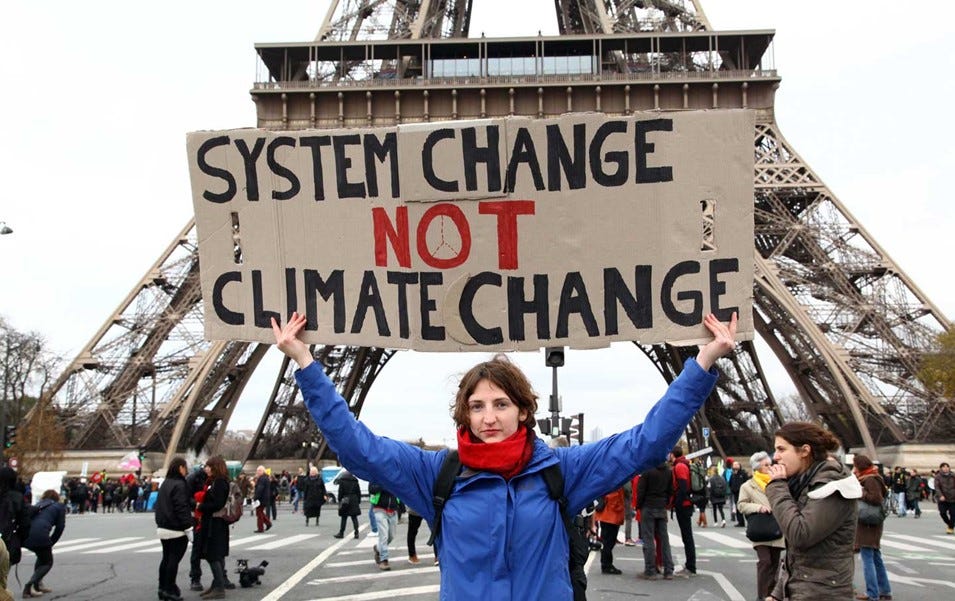
Corporate sustainability is often discussed as though its challenges were primarily managerial: setting better environmental targets, appointing more responsible executives, improving corporate reporting, and investing in sustainable technologies.
But what if the problem goes deeper than corporate management? What if the greatest obstacles to sustainability are rooted in who owns economic resources, who controls investment, and who has the political influence to shape the rules governing business?
More than half of global GDP, approximately $40 trillion, depends on nature. Yet investment continues to finance activities that degrade the ecosystems on which economic prosperity ultimately depends.
Corporate Ownership
Stock ownership is heavily concentrated. Globally, billionaires either lead or are principal shareholders in more than a third of the world’s 50 largest corporations, whose combined market value is approximately $13.3 trillion.
In the United States, the wealthiest 1% of households held approximately 51% of corporate equities and mutual fund shares in 2026. The top 10% hold between 87– 93% of these assets.
The concentration of corporate ownership matters not simply because wealthy individuals accumulate financial assets but because ownership can translate into influence over corporate governance, investment priorities, and the distribution of societal economic benefits.
However, ownership does not automatically translate into direct control. Institutional investors, corporate boards, executives, and voting arrangements also influence corporate decisions.
Investment, consumption, and the environment
The environmental consequences of concentrated wealth extend beyond corporate investment portfolios. The investment and consumption patterns of the wealthiest populations also contribute disproportionately to environmental degradation.
Billionaires have substantial investments in highly polluting industries. According to Oxfam , “the emissions of the investment portfolios of just 308 billionaires total more than the combined emissions of 118 countries.” Research published in Nature estimates that the consumption patterns of the wealthiest 10% generate between $1.7 trillion and $5.7 trillion in environmental damage annually, with the biggest impacts associated with biodiversity loss and climate change.
Research published in 2025 also highlights the unequal responsibility for global warming. Between 1990 and 2020, the wealthiest 1% contributed approximately 20 times more to global warming than the average person, while the wealthiest 0.1% contributed approximately 76 times more.
Taken together, these findings challenge the conventional assumption that environmental responsibility is primarily a matter of individual consumer choices or improvements in corporate operations.
Economic Power and Political Influence
These findings raise a broader question about economic inequality: those who benefit most from the existing economic system often have a disproportionately large environmental footprint, while those with the fewest resources have relatively little influence over the decisions shaping their environmental future.
Economic power does not stop at corporate ownership or investment decisions. It can also translate into political influence that helps preserve existing economic advantages and, in some circumstances, expand them.
Wealthy individuals and corporations use campaign contributions, lobbying, and industry associations to influence public policy. This influence matters because environmental regulations, climate legislation, and other public policies establish the conditions under which businesses operate.
This creates a self-reinforcing relationship between economic and political power. Concentrated wealth provides resources to influence public policy. Policies that protect existing economic advantages can, in turn, preserve wealth concentration and provide further opportunities for political influence.
The influence of corporate interests over governmental policies is particularly visible in international climate negotiations. Industry lobbyists and industry associations are actively involved in COP negotiations, often in larger numbers than government delegates and operate in close proximity to their governments’ delegations.
The important issue is not simply that corporations participate in climate discussions. It is whether industries with substantial financial interests in maintaining existing economic arrangements can exercise disproportionate influence over the policies intended to transform them.
The limitations of voluntary corporate sustainability commitments become particularly apparent in this context.
Why Voluntary Corporate Commitments Are Not Enough
Even corporations with responsible executives and environmentally conscious shareholders operate within an economic system that rewards maximum profitability, contentious growth, and ever larger returns on investment. Although profitability and environmental responsibility are not necessarily incompatible, conflicts can arise when protecting ecological and social interests requires decisions that can reduce short-term financial returns.
Voluntary sustainability initiatives cannot reliably resolve these conflicts. Frameworks such as the UN Global Compact and the UN Guiding Principles on Business and Human Rights provide important guidance, but they do not establish legally binding corporate obligations with effective enforcement mechanisms. Most corporations, in fact, opposed UN’s initial proposals to make the Compact legally binding on businesses.
Consequently, corporations retain considerable discretion over how they interpret and implement their commitments. Meaningful accountability requires more than responsible management and voluntary promises. It requires enforceable obligations on behalf of the larger society, effective public regulation, and institutions capable of holding powerful economic interests accountable.
Conclusion
The challenge, therefore, is not simply to persuade corporations to become more environmentally responsible. It is to reconsider the economic and political arrangements that determine whose interests’ corporations serve, whose voices influence public policy, and who bear the environmental consequences of economic activity.
Corporate sustainability cannot be separated from questions of economic inequality, corporate accountability, and democratic governance. Environmental progress requires businesses to operate within an economic and political system that recognizes ecological limits and serves broader social interests.
Ultimately, the challenge is not simply to make corporations more sustainable. It is to create economic and political conditions under which sustainability becomes a responsibility that businesses cannot simply choose to ignore.